The Real Stakes Behind the Israel-Iran Ceasefire Debate - What Comes After the War?
The emerging Israel-Iran ceasefire framework is being presented as a diplomatic breakthrough, but the reality is far more complex. While the agreement temporarily reopens the Strait of Hormuz and pauses direct hostilities, it leaves unresolved the core issues that triggered the conflict, including Iran's nuclear program, missile capabilities, and regional proxy networks. Israel's dissatisfaction, Hezbollah's role in Lebanon, Gulf state calculations, and broader regional realignments all suggest that the ceasefire may represent only a temporary pause rather than a lasting settlement. The article examines the competing interests shaping the post-war Middle East and explains why the true struggle may begin after the shooting stops. An in-depth geopolitical analysis of the Israel-Iran ceasefire debate, examining regional power calculations, Israel's response, Hezbollah's role, Gulf state interests, the future of the Strait of Hormuz, and the evolving balance of power in the Middle East.

Why every regional power is calculating what comes after the shooting stops
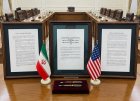
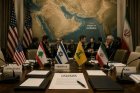
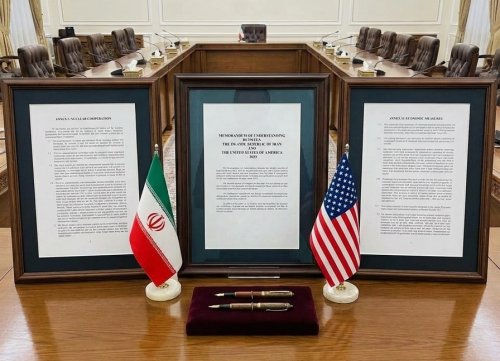
Here's a sentence that should stop you mid-scroll: the country that started this war, alongside the United States, wasn't in the room when the deal to end it got negotiated. On June 15, American and Iranian officials announced they'd reached a framework to wind down the war that's consumed the Middle East since February and Israel, despite launching the opening strikes that killed Iran's supreme leader and triggered five months of regional carnage, found out about the terms more or less the way the rest of the world did. That's not a footnote. That's the story.
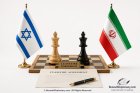
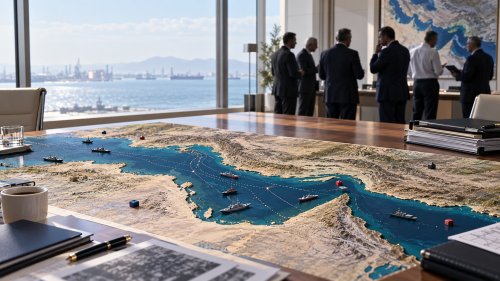
To understand what's actually happening behind this ceasefire debate, you have to stop treating it as a binary question war or peace, deal or no deal and start treating it as what it really is: a half-dozen governments simultaneously trying to figure out what their position looks like in a Middle East that's about to look nothing like the one that existed on February 27th.
The headline deal is thinner than it sounds
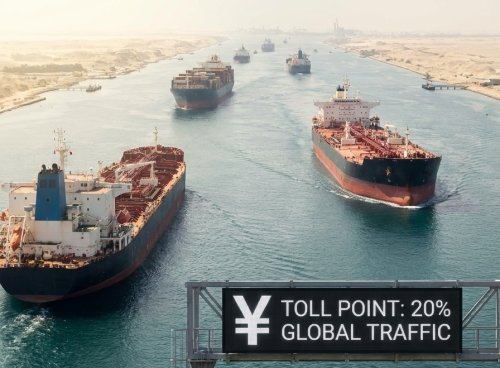
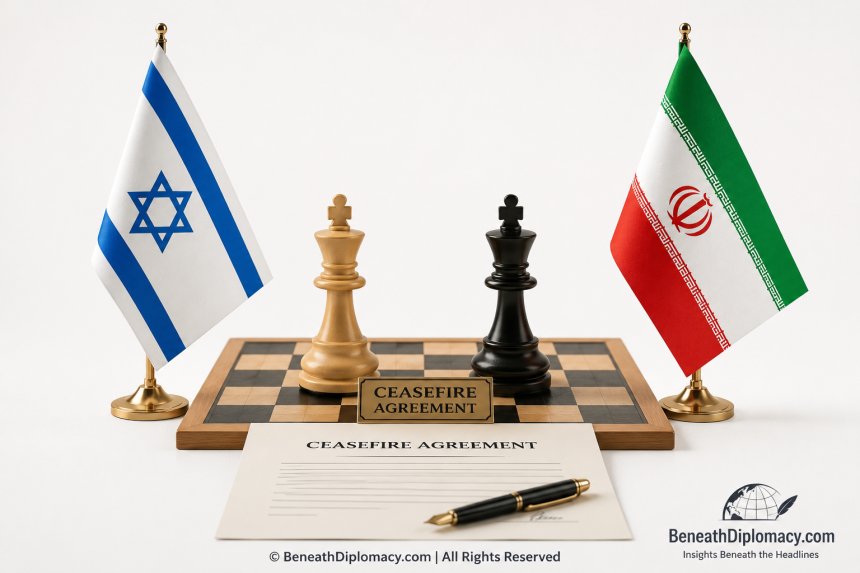
Strip away the diplomatic relief in the announcement and look at what the framework actually contains. It halts the American naval blockade on Iranian ports. It reopens the Strait of Hormuz. It buys sixty days for talks on the issue everyone agreed, back in February, was the entire point of this war: Iran's nuclear program. That's it. That's the deal that's being celebrated in capitals from Paris to New Delhi as a turning point.
Notice what's missing. There's no resolution on uranium enrichment, the single issue that's blocked every US-Iran negotiation for years Washington wants full dismantlement, Tehran calls continued enrichment non-negotiable, and the framework simply punts that fight sixty days down the road. There's no agreement on what happens to Iran's stockpile of highly enriched uranium. There's no settlement on the future of Iran's ballistic missile program. There's no mechanism forcing Iran to end support for regional proxies. In other words: every single war aim the US and Israel publicly cited in February to justify the original strikes remains essentially unresolved. What got negotiated isn't an end to the war. It's a sixty-day pause dressed up as one, with the actual hard questions still sitting exactly where they were when the bombing started except now with a supreme leader dead, a regime that's massacred its own protesters, and a region that's absorbed months of strikes nobody can undo.
Why Israel is furious, and why that fury matters
Israel's reaction tells you almost everything about where this is really headed. Opposition leader Yair Lapid has called it an "absolute failure." Israeli officials have pointed out, accurately, that the deal achieves none of the war's stated objectives not eliminating Iran's nuclear program, not depleting its missile stockpile, not ending its support for proxies, not creating conditions for regime change. Defense Minister Israel Katz has responded by declaring Israel simply won't be bound by terms it never agreed to, vowing the IDF stays in security zones across Lebanon, Syria, and Gaza indefinitely, regardless of what Washington and Tehran sign off on.
That's not just bruised pride. It's a structural problem for the entire ceasefire, because Israel holds the one card that can blow the whole thing up at any moment: its ongoing military presence in Lebanon. And this isn't theoretical it already happened, more than once. In early June, Israeli strikes on Beirut's southern suburbs nearly tanked the entire negotiation track, triggering Iranian missile barrages and Israeli retaliation in the worst direct exchange since the original April truce. Each time Israel hits Lebanon, Iran treats it as grounds to walk away from talks with Washington entirely, because Tehran has explicitly tied any lasting deal with the US to an end to Israel's campaign against Hezbollah. Which means the most fragile, hardest-to-control variable in this entire ceasefire isn't Iran's nuclear program, or American resolve, or Gulf state anxiety. It's whether Israel, sidelined from its own war's diplomatic endgame, decides to simply keep fighting the parts of it that nobody negotiated away.
President Trump's own private assessment of Netanyahu, reported by Axios, was about as undiplomatic as it gets he reportedly said the Israeli leader has no judgment at all. That's the sound of an alliance under real strain, not just normal friction. Washington needs Israeli restraint to make the broader deal stick. Israel, watching its core war aims go unmet, has very little incentive to provide it.
Lebanon is the trapdoor under the whole agreement
If you want the single most underappreciated thread in this story, it's Lebanon, and specifically Hezbollah's flat refusal to accept any version of the disarmament terms attached to nearly every ceasefire proposal so far. Hezbollah's leader has called the terms on the table tantamount to "surrender" stop fighting, withdraw from southern Lebanon, and watch Israel continue striking anyway. Hezbollah isn't even a party to the US-Iran negotiations, which means it has every reason to act as a spoiler with no formal stake in keeping the broader deal alive. Every time Israel and Lebanon's government announce a ceasefire, the announcement outpaces the reality on the ground, and fresh strikes follow within hours or days.
This matters far beyond Lebanon's borders, because Iran has made the Lebanon question a literal precondition for its own negotiations with Washington. A senior Iranian national security official put it with striking directness back in April: without restraining Israel in Lebanon, there would be no ceasefire and no negotiations at all. That's the trapdoor. The US-Iran deal can collapse not because of anything Washington or Tehran does, but because of a fight in a third country involving an armed group that isn't even at the table.
What the Gulf states are actually calculating
Watch what the Gulf states are saying, and more importantly, what they're not saying, and a clear pattern emerges: nobody in the region wants this war to restart, but nobody trusts the ceasefire to hold either, so everyone is positioning for a post-war order that may or may not arrive. Bahrain has called explicitly for a "lasting solution" that permanently prevents Iran from acquiring nuclear weapons or destabilizing the region a statement that reads as much like institutional skepticism about this specific deal's durability as it does support for it. India and Germany have both focused their public statements almost entirely on one practical demand: unimpeded shipping through Hormuz, a tell that for countries outside the conflict's ideological core, the war's economic fallout matters more than its theological or strategic dimensions.
Then there's the move that may end up mattering more than anything in the actual ceasefire text: Trump's push, dating back to May, for a dramatic expansion of the Abraham Accords, explicitly framed as part of ending the Iran war. Washington has reportedly pressed Saudi Arabia, Qatar, Pakistan, Turkey, Egypt, and Jordan to consider normalizing relations with Israel in a coordinated wave. That's not a minor diplomatic side-project. If even a handful of those countries move, it would represent a more permanent reshaping of the regional order than anything likely to emerge from the actual Iran nuclear talks a bet that the war's real legacy might not be about Iran's centrifuges at all, but about which Arab capitals decide this is finally the moment to formalize ties with Israel while Iran is at its weakest in decades.
The numbers nobody's life gets easier from
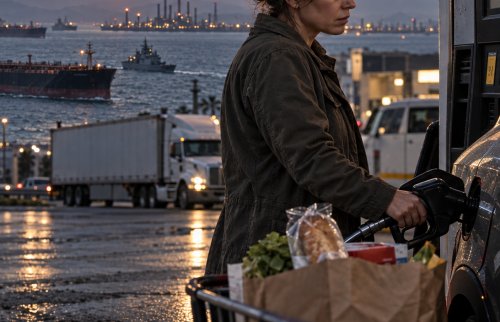
It's worth pausing on what this war has actually cost before getting lost entirely in the diplomacy. Thousands dead inside Iran, including the regime's own top leadership. Hundreds dead across Lebanon. Dozens killed in Israel and Gulf Arab states. Millions of people whose daily lives have been upended by months of strikes, blockades, and disrupted trade. Fuel, food, and basic goods have risen in price far beyond the region itself, a direct consequence of the Hormuz closure rippling through global markets and even with a deal on paper, analysts are warning those elevated prices will likely outlast the war itself by months, simply because supply chains don't snap back the moment a ceasefire gets signed.
That's the part that tends to get lost in coverage obsessed with whether Trump's latest "two weeks" promise will finally prove accurate this time. CNN's own count found Trump claimed a deal was imminent at least thirty-eight separate times between late March and early June. The diplomatic theater has been near-constant. The actual resolution has, until this week, been close to nonexistent. And even now, with a framework on paper, the analysts most closely tracking the negotiations are careful to note that signing ceremonies, scheduled for later this week in Geneva, are not the same thing as implementation and that even a fully reopened strait will take months to translate into lower prices for the ordinary people who've been paying for this war at the pump and the grocery store since February.
What's really happening behind the news
Pull all of these threads together and the picture that emerges is considerably more interesting, and more unstable, than "war ends, peace begins." What's actually happening is a multi-party scramble to define the rules of a post-war Middle East before anyone has actually established there will be a lasting post-war period to define rules for. The US wants a deal it can call a win before midterm elections. Iran wants sanctions relief and frozen assets released without giving up enrichment, the one card it has left after losing its supreme leader and absorbing the heaviest military losses in its modern history. Israel wants to keep fighting the parts of this conflict Hezbollah, Lebanon, Iran's broader proxy network that the US-Iran framework conveniently leaves untouched, and is making clear it will act unilaterally if it has to. Hezbollah wants to survive as a fighting force and sees disarmament as an existential threat regardless of what bigger powers negotiate around it. The Gulf states want stability and cheap, unimpeded oil shipping more than they want to take sides in anyone's ideological fight. And several Arab governments are quietly weighing whether Iran's weakened state finally makes this the moment to formalize relationships with Israel that would have been unthinkable in public a decade ago.
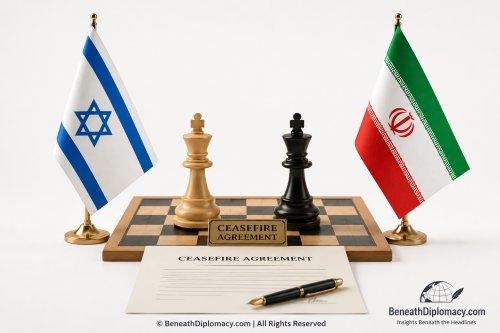
None of those agendas are fully compatible with each other, which is exactly why a signed framework in Geneva this week won't be the end of this story. It'll be the start of the next phase of it one where the real fight isn't between Washington and Tehran anymore, but between everyone who has to decide whether they can live with a deal that, on its own terms, resolved almost nothing.