The Boomerang Economy: How America's War on Iranian Oil Is Taxing Americans
As the 2026 Iran war grinds through its seventh month, Washington's escalating sanctions campaign against Tehran is producing a costly side effect at home. This piece traces how the closure and reopening of the Strait of Hormuz, the reach of secondary sanctions under Operation Economic Outcast, and the resulting spike in oil and diesel prices are feeding directly into US inflation and straining the very dollar system the sanctions were designed to leverage.

There is a particular kind of confidence that comes from believing your weapon only fires in one direction. Washington has spent the past seven months testing that belief against the Strait of Hormuz, and the results, so far, suggest the confidence was misplaced. The 2026 Iran war, now in its seventh month, has become a case study in a phenomenon that sanctions scholars have long warned about but that policymakers routinely underestimate. Economic weapons built to isolate an adversary tend to leave marks on the hand that swings them.
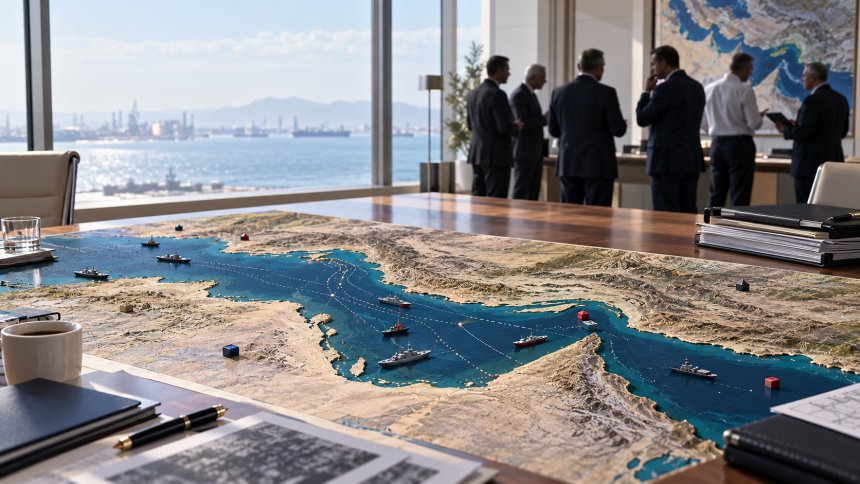
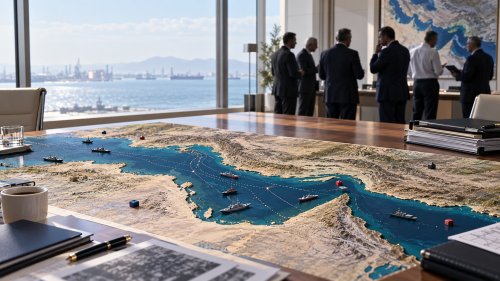
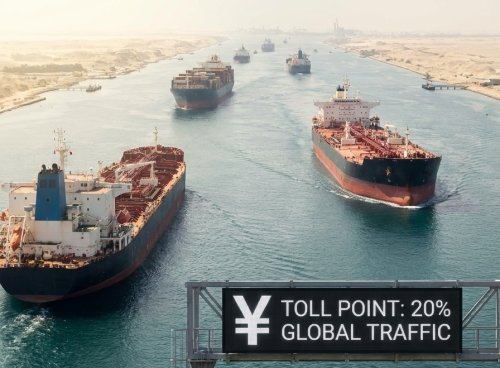
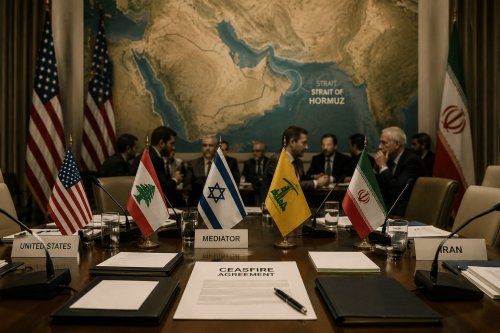
The mechanics are not complicated, even if the politics around them are. Roughly one fifth of the world's seaborne oil once passed through Hormuz in an ordinary month, a bottleneck barely thirty miles wide at its narrowest point. When the United States and Israel opened the war in late February with strikes on Iran's nuclear and military infrastructure, Tehran's answer was not to concede the point but to threaten the point itself. Since then the strait has functioned less like a shipping lane and more like a pressure valve, opening and closing according to the state of negotiations in Islamabad, Geneva, or wherever the talks happen to be that month. The US military has kept oil moving through escorted convoys, reportedly shepherding more than six hundred million barrels since May, but even that effort has not restored anything like normal flow. American officials now estimate the war is costing the market roughly eight million barrels a day against a pre war baseline near twenty million.
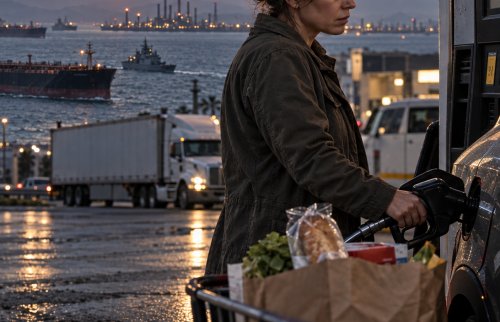
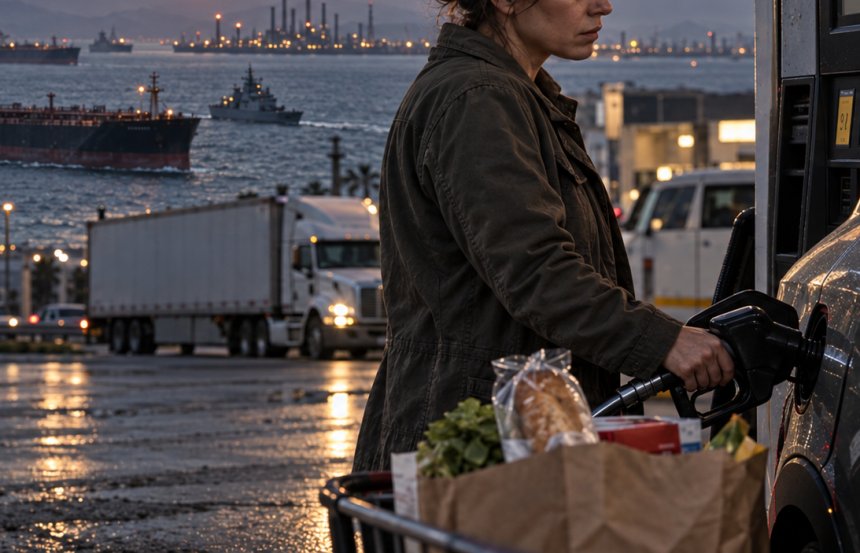
Brent crude closed above one hundred and eight dollars a barrel this week, its highest level since May, having climbed nearly twenty percent over the past month alone. Saudi Arabia's own crude production fell by close to two million barrels a day in August as the kingdom absorbed Houthi strikes on its export infrastructure, including an attack this month on the East to West pipeline that briefly reduced one of Riyadh's main alternatives to Hormuz. Tanker insurance rates have reached record highs. None of this is abstract to the American driver. The national average price of diesel has pushed past six dollars a gallon, a threshold that would have seemed alarmist to forecast a year ago, and gasoline crossed four dollars a gallon back in the spring when the fighting first began in earnest.
This is where the sanctions campaign complicates its own logic. In late August, Treasury Secretary Scott Bessent unveiled what the administration calls Operation Economic Outcast, a sweeping expansion of secondary sanctions meant to cut Iran off from its remaining sources of hard currency. The campaign reaches beyond Iran's borders by design. It threatens any bank, shipper, or trading house anywhere in the world with exclusion from the dollar system if it continues doing business with Tehran, regardless of whether the underlying transaction ever touches American soil. Treasury has already moved against an Egyptian state bank's foreign branch over roughly one point eight billion dollars in transactions it links to Iranian shadow banking networks, and administration officials have signaled that Chinese refiners and, eventually, Chinese banks are next on the list, given that China has for years absorbed the bulk of Iran's sanctioned oil exports.
The theory behind this kind of pressure is sound in isolation. Dollar access is genuinely irreplaceable for most of the global financial system, and the threat of losing it concentrates minds in Ankara, Dubai, and Beijing in a way that moral suasion never could. But every previous round of sanctions escalation against Iran, going back to the 2010s, has taught the same lesson in diminishing returns. Each expansion of secondary sanctions gives foreign governments and firms one more reason to build financial infrastructure that does not run through New York, whether through renminbi settlement, barter arrangements, or the kind of shadow banking networks Treasury is now racing to dismantle. The tool works today because fear of the dollar still outweighs the inconvenience of avoiding it. That balance is not fixed, and Washington's own economists know it.
The domestic price of the war is now showing up in the data that the Federal Reserve watches most closely. Researchers at the Dallas Fed estimated this spring that a Hormuz disruption lasting even a single quarter would add roughly six tenths of a percentage point to headline personal consumption inflation for the year, with core inflation rising by about two tenths of a point on top of whatever the broader economy was already absorbing. Consumer price growth did in fact jump to 3.3 percent in March, its highest reading in nearly two years, driven substantially by energy costs layered on top of tariff related price increases already working through the system. The Federal Reserve held interest rates steady through the spring and summer specifically because officials could not tell whether the inflation was a temporary shock or the start of something stickier, a version of the same uncertainty that paralyzed monetary policy during earlier oil crises.
None of this means the sanctions campaign is wrong on its own terms, or that a nuclear armed Iran would be a safer outcome for the world than an economically isolated one. It does mean that the costs of this strategy are not being paid exclusively by Tehran, and that the people writing the checks, American drivers, European central bankers, and the foreign banks now weighing whether dollar access is still worth the compliance risk, deserve a more honest accounting than the language of economic D-Day tends to offer. Sanctions regimes built around chokepoints have a way of teaching the rest of the world to route around the chokepoint altogether. Whether Washington's current campaign accelerates that lesson or forestalls it may end up mattering more than whether it succeeds against Iran in the near term.